Commercial facilities face distinct structural pest pressures based on architecture and immediate geography in Omaha. Historic brick warehouses in the Old Market and ground-level eateries in Benson encounter high…
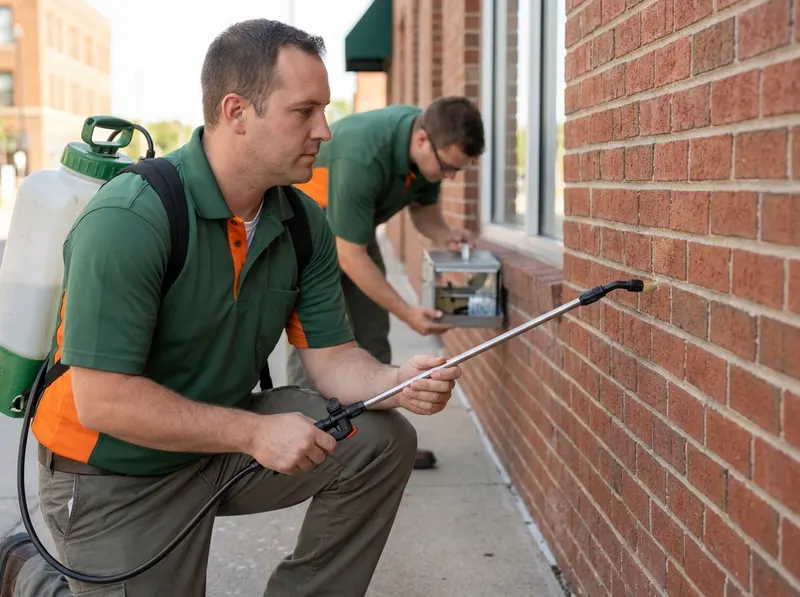
Commercial facilities face distinct structural pest pressures based on architecture and immediate geography in Omaha. Historic brick warehouses in the Old Market and ground-level eateries in Benson encounter high Norway rat migration along alley easements and sewer conduits, while light-industrial parks in Millard and distribution centers in Elkhorn confront field mice displaced during autumn agricultural harvesting. Older timber basements in Dundee and multi-unit residential flats in Minne Lusa often host persistent German cockroach clusters inside shared plumbing chases. Standard broad-spectrum retail sprays fail in commercial settings because they push active insect colonies deeper into drywall framing and drop ceilings rather than resolving the harborage node.
Selecting a commercial pest management strategy requires evaluating operational footprint against public traffic volume. Standalone retail units in Aksarben Village benefit from perimeter granular barriers and tamper-proof exterior bait stations placed at 30-to-50-foot intervals to intercept rodents before they breach loading docks. In contrast, medical offices and childcare facilities near Morton Meadows and Field Club necessitate non-volatile, pyrethroid-free botanical micro-treatments and mechanical entry-point exclusion using 16-gauge copper mesh. The primary operational trade-off centers on treatment intensity versus facility downtime: thermal and residual void treatments require rooms to remain vacant for 2 to 4 hours post-application, whereas exterior perimeter defenses operate continuously during normal working hours without disrupting day-to-day business operations.
Technicians follow an empirical protocol to resolve infestations without unnecessary chemical load. Step one involves an exterior visual audit mapping structural gaps wider than 0.25 inches around foundations, expansion joints, and overhead door seals near riverfront humidity zones and municipal rail lines. Step two deploys interior non-toxic sticky monitoring boards to identify insect travel runways and measure baseline density. Step three executes focused barrier treatments along baseboards, mechanical chases, and sub-slab conduits, followed by permanent physical exclusion using silicone sealants and stainless-steel hardware cloth. Step four delivers a written regulatory-compliance log detailing product EPA registration numbers, targeted pests, and physical defense markers for corporate environmental health and safety audits.
Every job gets a firm, written price after a free on-site visit.
Tell us about your commercial pest management job in Omaha and we'll send a clear, written quote, usually the same day.
 Zenvora Pest Shield