Mosquito and tick pressure in Douglas County peaks alongside intense Midwest humidity cycles, which trigger rapid vector hatching across both historical districts and sprawling suburban parcels. In established…
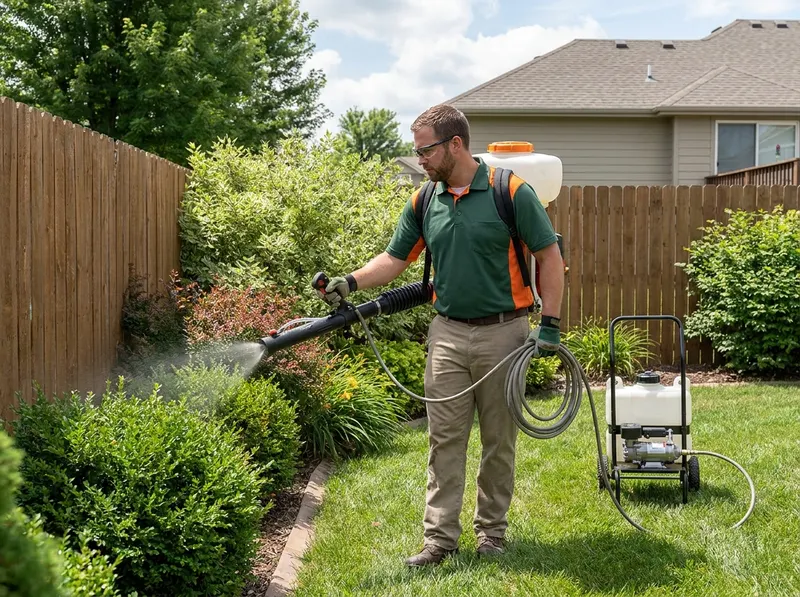
Mosquito and tick pressure in Douglas County peaks alongside intense Midwest humidity cycles, which trigger rapid vector hatching across both historical districts and sprawling suburban parcels. In established neighborhoods like Dundee, Field Club, and Minne Lusa, mature oak canopies, broad-leaf hostas, and shaded property edges retain soil moisture, producing high-risk microclimates for Ixodes scapularis and Culex mosquitoes. Properties in west-facing developments across Millard and Elkhorn face heavy runoff basins and retention ponds that demand rigorous perimeter barrier disruption to prevent adult migration into outdoor play spaces. Rather than utilizing broad broadcast misting that dissipates in sunlight, certified applications target the lower thirds of ornamental plants, structural deck posts, and brush perimeters where vectors shelter during mid-afternoon heat.
A single barrier treatment establishes an active microencapsulated residual layer that withstands standard Omaha rainfall totals up to 2 inches before requiring supplemental reinforcement. For standard backyards measuring under 15,000 square feet, a directed backpack application focuses on transition zones between manicured Kentucky bluegrass and wild vegetation margins, neutralizing tick questing stations without broad-spectrum chemical saturation across main recreational turf. For wooded acreages bordering natural preserves near Florence or properties along Little Papillion Creek in Aksarben Village, comprehensive yard reduction integrates biological insect growth regulators (IGRs) within identified standing-water pockets, preventing larval pupation within bird baths, clogged gutter lines, and French drain collection wells.
Selecting standalone seasonal reduction over continuous contract misting provides targeted suppression for specific warm-weather active months, such as high-risk periods from May through September. The trade-off involves active monitoring: while an immediate barrier knockdown suppresses 90% or more of active biting adults within 24 hours, non-contract applications require monitoring after torrential Missouri River valley storms to verify barrier longevity. Children and family pets may safely re-enter treated turf, patios, and garden spaces once the targeted liquid application has fully dried, a process requiring between 45 and 60 minutes in typical 75-degree ambient air.
Every job gets a firm, written price after a free on-site visit.
Tell us about your mosquito and tick yard reduction job in Omaha and we'll send a clear, written quote, usually the same day.
 Zenvora Pest Shield