Rodent control in eastern Nebraska addresses distinct behavioral biology driven by seasonal temperature drops along the Missouri River basin. In early autumn, field mice and Norway rats migrate inward from rural…
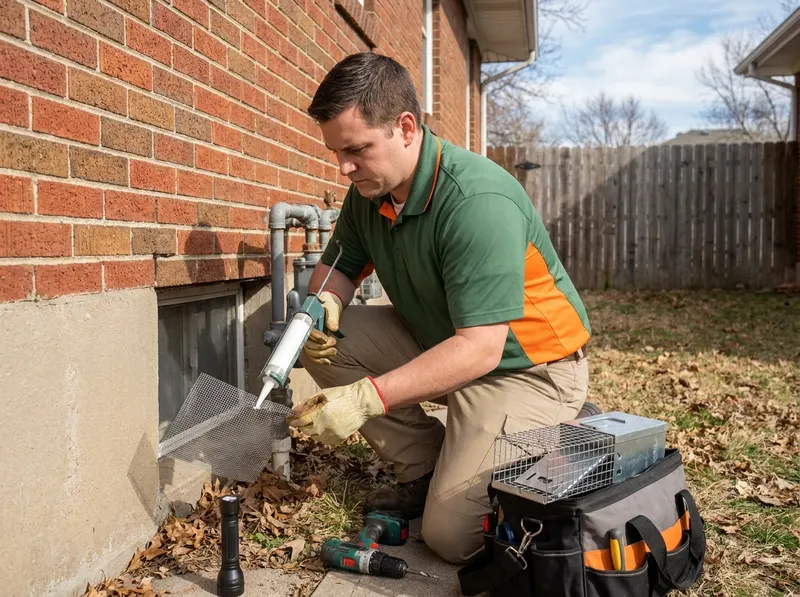
Rodent control in eastern Nebraska addresses distinct behavioral biology driven by seasonal temperature drops along the Missouri River basin. In early autumn, field mice and Norway rats migrate inward from rural perimeters and municipal drainage systems, entering residential structures across Dundee, Benson, and Minne Lusa through basement window wells, uncapped weep holes, and rotted sill plates. Mechanical exclusion directly eliminates these pathways by anchoring 19-gauge galvanized hardware cloth over crawlspace vents and packing stainless steel mesh into brick-to-fascia gaps, denying rodents structural access without relying on interior toxic baits that endanger household dogs, cats, or young children.
A complete exclusion plan differs fundamentally from standard recurring rodent baiting. Exterior bait stations reduce outdoor populations but fail to address active drywall chewing, electrical wiring degradation, or soiled attic cellulose insulation. For homes in older tree-canopy districts like Field Club and Morton Meadows, rooflines and fascia corners provide easy transit for rodents scaling overhanging branches. Sealing these entry points requires structural ladder work, flashing repairs, and heavy-duty polyurethane elastomeric caulk. Conversely, newer slab-on-grade builds in Elkhorn and Millard typically experience rodent pressure around air-conditioning conduit penetrations, garage corner gaskets, and utility line entrances, requiring localized compression seals rather than roof-ridge repairs.
Property owners can evaluate service tiers based on the scope of infestation. If scratching sounds are isolated to a single pantry wall with no attic droppings, interior mechanical trapping resolves the active colony over 5 to 10 days. If rodents inhabit blown-in fiberglass insulation across a 2,000-square-foot attic in Aksarben Village or an Old Market commercial loft basement, full exclusion sealing paired with localized sanitization prevents re-entry. Trapping alone resolves current pests but leaves the building vulnerable to subsequent litters within 30 days, while exclusion alone risks trapping live rodents inside ceiling voids. Executing both concurrently delivers complete eradication while keeping interior living spaces clean and secure.
Every job gets a firm, written price after a free on-site visit.
Tell us about your rodent trapping and exclusion job in Omaha and we'll send a clear, written quote, usually the same day.
 Zenvora Pest Shield