Spiders and occasional invader defense in Omaha NE operates on physical exclusion and residual perimeter chemistry rather than indiscriminate indoor aerosol broadcasting. In older Omaha housing stock, such as…
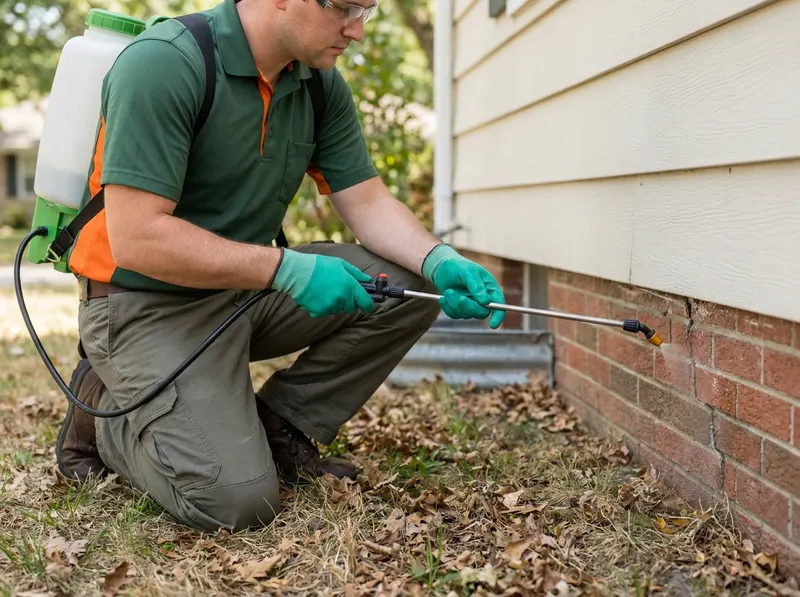
Spiders and occasional invader defense in Omaha NE operates on physical exclusion and residual perimeter chemistry rather than indiscriminate indoor aerosol broadcasting. In older Omaha housing stock, such as brick-and-timber residences in Dundee, Field Club, and Minne Lusa, field stone basements and settled mortar joints present direct crawl gaps for predatory arachnids like wolf spiders and brown recluse. Conversely, newer split-entry constructions in Millard and Elkhorn frequently experience heavy autumn massings of boxelder bugs and brown marmorated stink bugs gathering on western vinyl exposures. Treatments apply a weather-stable micro-encapsulated residual barrier around the lower foundation perimeter, exterior door thresholds, and window wells. Indoor crack-and-crevice treatments utilize non-volatile formulations focused strictly on utility penetrations, unfinished mechanical rooms, and basement sill plates, leaving common family rooms, nursery carpets, and pet zones clean and undisturbed.
Selecting a dedicated perimeter defense over reactive spot-spraying changes the pest dynamic across seasonal transitions. When temperatures drop along the Missouri River corridor near Florence and Fontenelle Forest, ground-dwelling invaders migrate toward artificial heat sources. Homeowners who select point-of-contact retail sprays resolve only the solitary visible specimen, leaving hidden colonies untouched within wall voids. A structured exterior barrier intercepts migrating arthropods across an 8-foot operational band before indoor breach occurs. The operational trade-off centers on environmental exposure: exterior rainfall and direct ultraviolet degradation near open lots like Standing Bear Lake degrade chemical barriers faster than indoor spaces, necessitating scheduled reapplications every 60 to 90 days during active spring emergence and fall clustering cycles.
Execution follows an objective three-step eradication sequence. First, a certified technician conducts an exterior and sub-grade inspection, calculating foundation linear footage and logging structural gaps around sill plates, egress window wells, and plumbing stacks. Second, mechanical web removal clears overhangs and soffits, followed by the application of a targeted pyrethroid barrier calibrated to bind to stone, concrete, and turf without washing into soil beds. Third, interior utility voids receive targeted dust injections, and glue-board monitoring stations are placed in low-traffic mechanical spaces to track population densities. Homeowners can reach dispatch at (402) 953-0095 to schedule an initial diagnostic inspection.
Every job gets a firm, written price after a free on-site visit.
Tell us about your spiders and occasional invader defense job in Omaha and we'll send a clear, written quote, usually the same day.
 Zenvora Pest Shield