Stinging insect and wasp removal in Omaha addresses aggressive colony activity on residential properties. In historic Dundee, Field Club, and Minne Lusa, early 20th-century homes feature open soffits, decorative rafter…
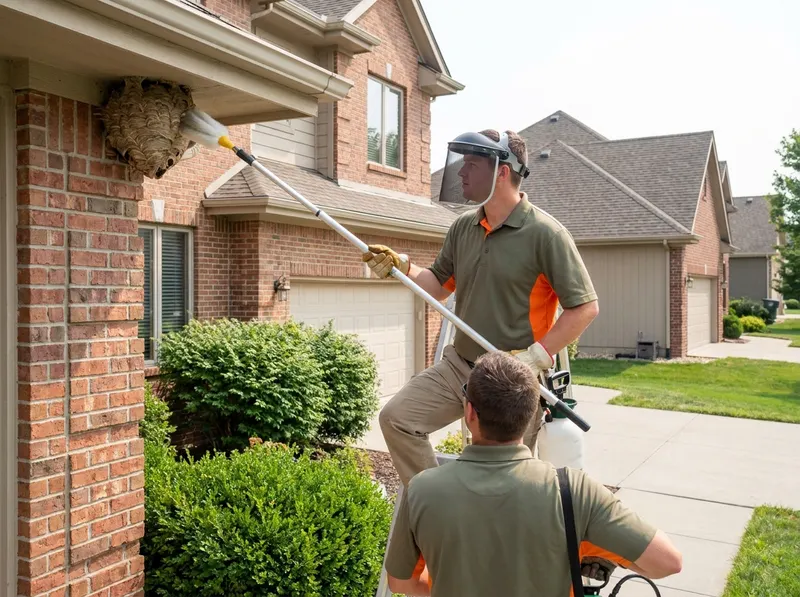
Stinging insect and wasp removal in Omaha addresses aggressive colony activity on residential properties. In historic Dundee, Field Club, and Minne Lusa, early 20th-century homes feature open soffits, decorative rafter tails, and porous mortar lines that paper wasps select for umbrella comb attachment. Modern builds in Elkhorn, Millard, and Aksarben Village more frequently develop concealed yellowjacket colonies inside weep screeds, vinyl siding voids, and daylight window wells. Standard retail aerosols distribute solvent carriers that cause volatile drift into attic vents and open windows, often failing to reach queen chambers buried deep inside soffit voids. Certified extermination utilizes micro-encapsulated formulations and high-pressure pyrethrin dusting that penetrate nest envelopes on contact, achieving lethal knockdown while keeping residential perimeters family-safe and pet-friendly once dry.
Decision-fit guidance depends on the species location and defensive radius. An umbrella-shaped paper wasp nest attached to an exterior deck joist in Morton Meadows poses minimal immediate interior risk, making targeted knockdown and scrape removal sufficient. In contrast, yellowjackets traveling behind brick facades in the Old Market or subterranean colonies excavated near play structures near Standing Bear Lake and Fontenelle Forest require localized residual dusting and subterranean void injections. The operational trade-off centers on non-destructive extraction versus structural access: treated exterior nests located inside sealed walls remain in place to decay naturally rather than cutting interior drywall, provided structural void entrances are dusted and sealed.
Technicians execute a three-step barrier eradication protocol. First, technicians map active flight corridors and nest points of ingress during daylight flight hours. Second, direct specialized micro-dusting or residual liquid barrier applications are injected into the nest core to eliminate workers, brood, and queens without triggering defensive swarms. Third, once defensive activity ceases, typically within 15 to 45 minutes, accessible aerial combs are detached, bagged, and removed from the property, followed by repellent surface applications along eave perimeters to halt secondary colony re-establishment.
Every job gets a firm, written price after a free on-site visit.
Tell us about your stinging insect and wasp removal job in Omaha and we'll send a clear, written quote, usually the same day.
 Zenvora Pest Shield